False Reviews to Increase Credibility

Trust Pilot Reviews, how they really work.

A blue speech bubble with the word reviews and four stars on it.

Trustpilot Reviews: The Dangers of Rogue Tactics in the Spray Foam Industry


In the realm of online business evaluations, Trustpilot has emerged as a prominent platform where consumers can share their experiences. However, a troubling trend has developed within the spray foam industry, specifically concerning companies using deceptive tactics to manipulate their reputations. This article delves into the rogue strategies employed by certain businesses to generate fake reviews, particularly focusing on the implications for consumers seeking genuine feedback on Trustpilot reviews.


The Manipulation of Trustpilot Reviews

  1. Hiring SEO Companies for Review Fabrication: Some companies resort to hiring search engine optimization (SEO) firms to create hundreds of fake reviews on Trustpilot. These businesses understand that a high volume of positive feedback can significantly enhance their public image and improve their rankings in search engine results. By flooding the platform with fabricated testimonials that back up their claims, rogue traders can create an illusion of credibility that does not reflect their actual service quality.
  2. Creating Astroturfing Campaigns: Astroturfing involves creating the false appearance of grassroots support for a product or service. Rogue companies often create multiple fake accounts or use bots to post glowing reviews on Trustpilot and other platforms. This tactic tricks consumers into believing that there is widespread satisfaction with their services, while in reality, these reviews are entirely orchestrated.
  3. Manipulative Marketing Strategies: In addition to creating fake reviews, some companies engage in manipulative marketing strategies where they incentivize customers to provide positive feedback, often in exchange for discounts or freebies. While this practice may not always result in fake accounts, it skews the authenticity of the reviews, as it pressures real customers to write favorable feedback regardless of their actual experiences.


The Dangers for Consumers


The manipulation of Trustpilot reviews poses several risks for consumers:

  • Misleading Decisions: Through the proliferation of fake reviews, consumers may be led to believe that a particular service is of high quality when it is not. This can result in poor purchasing decisions, leading to financial loss and dissatisfaction.
  • Increased Vulnerability to Scams: Consumers relying on manipulated reviews may become more susceptible to scams perpetrated by rogue traders. When businesses misrepresent their services through fake testimonials, they can deceive unsuspecting clients into purchasing low-quality products or services at inflated prices.
  • Undermining Genuine Feedback: The presence of false reviews undermines the value of genuine customer feedback. When consumers encounter a sea of fabricated testimonials, it becomes increasingly challenging to identify trustworthy businesses and make informed decisions. This erosion of trust can harm reputable companies that genuinely provide quality products and services.


Combating the Issue


To protect themselves from falling victim to manipulated Trustpilot reviews, consumers can take proactive steps:

  • Research Beyond Reviews: Consumers should not rely solely on Trustpilot or any single review platform. Engaging in comprehensive research, including checking multiple review sites and visiting company websites for additional information, can provide a more balanced perspective.
  • Look for Patterns: When reading reviews, consumers should be cautious of patterns that suggest manipulation. For instance, an overwhelming volume of reviews in a short period or vague language in multiple testimonials may indicate fraudulent activity.
  • Engage with the Business: Potential customers can reach out to businesses directly to ask questions and request references or examples of previous work. Genuine businesses should be willing to provide this information and engage in transparent discussions about their services.


Conclusion


The manipulation of Trustpilot reviews by rogue traders is a significant concern in the spray foam industry. By employing deceptive tactics such as hiring SEO companies to fabricate reviews and executing astroturfing campaigns, these businesses create a false narrative that can mislead consumers.

Understanding the risks posed by such practices is essential for consumers seeking trustworthy information. Through careful research and critical evaluation of reviews, consumers can navigate the spray foam market more effectively and make informed decisions, ultimately avoiding the pitfalls of scams and subpar services.


Share this article

May 19, 2026
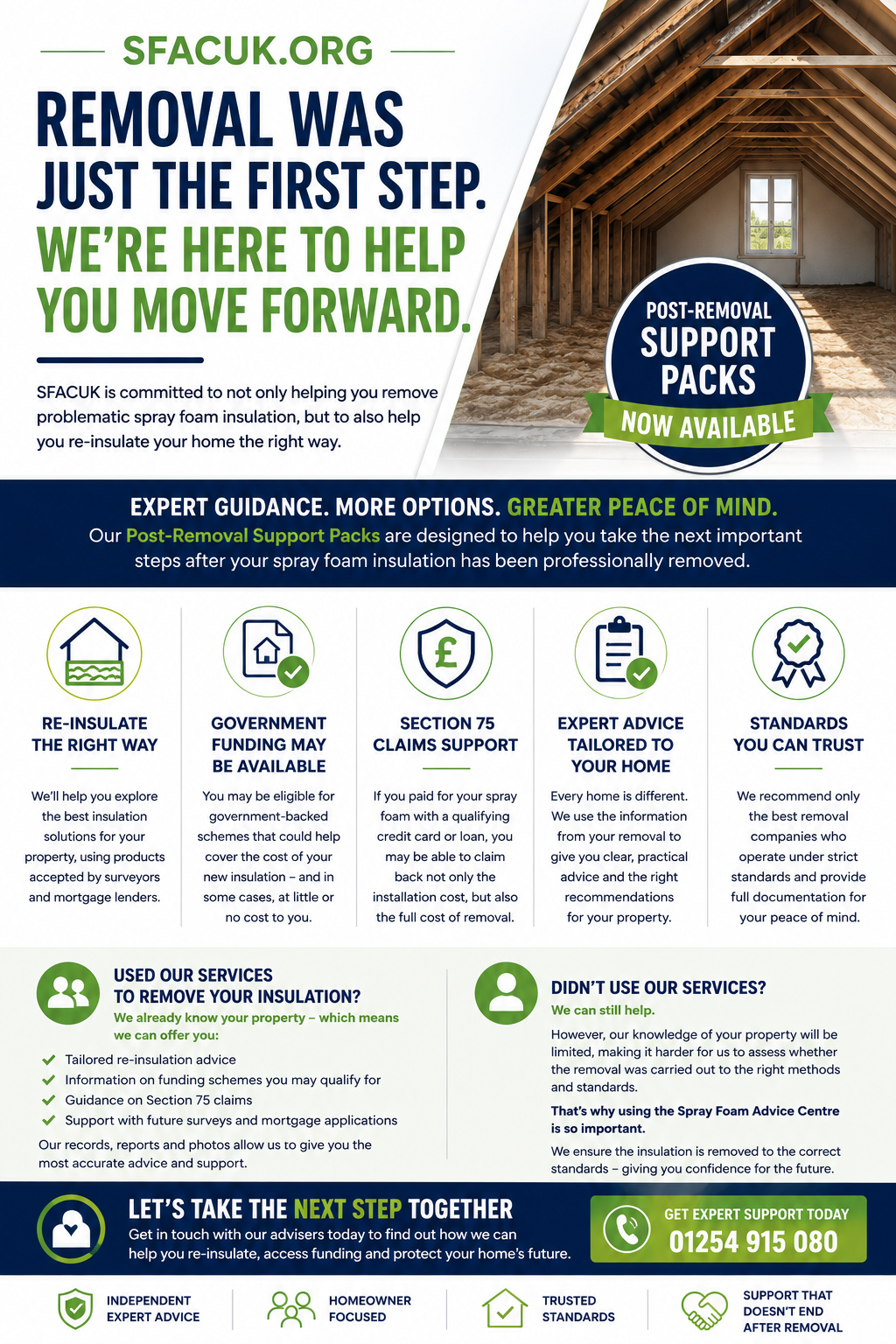
As the spray foam insulation crisis continues to affect homeowners across the UK, many people are only now discovering that they may have important legal protection under Section 75 of the Consumer Credit Act 1974. For some homeowners, this protection could prove financially life-changing. Why? Because if even part of the original spray foam installation was paid for using a credit card, homeowners may have the right to pursue claims not only for the installation itself — but potentially for associated losses, including costly removal work. At a time when many families are facing failed mortgage applications, equity release refusals, and expensive remediation bills, understanding Section 75 has become critically important. What Is Section 75? Section 75 of the Consumer Credit Act is a UK consumer protection law that makes credit card providers jointly liable for breaches of contract or misrepresentation by a retailer or service provider. In simple terms: If a company sold a product or service under misleading circumstances, and part of the payment was made using a credit card, the credit card company can also be held responsible. This protection applies even if: The company has ceased trading The installer refuses to help The warranty is worthless The homeowner only paid a deposit on the credit card Many consumers wrongly believe the entire balance must have been paid by credit card. That is not true. In many cases, paying just the initial deposit or first payment via credit card may be enough to trigger Section 75 protection. Why This Matters for Spray Foam Insulation Thousands of homeowners claim they were sold spray foam insulation without proper warnings about: Mortgage restrictions Lending refusals Future saleability concerns Ventilation risks Timber inspection limitations Potential removal costs Many homeowners state they were assured: “Mortgage lenders have no issue.” “The product is fully approved everywhere.” “It adds value to your home.” “It is completely safe for future buyers.” Years later, some are discovering: Their property is down-valued Equity release applications are declined Buyers cannot obtain mortgages Surveyors are flagging the roof structure Removal costs can exceed tens of thousands of pounds This is where Section 75 may become highly significant. Removal Costs May Also Form Part of a Claim One of the most important points homeowners should understand is this: Potential claims may not be limited solely to the original installation cost. If the product was misrepresented or sold without proper disclosure of foreseeable consequences, consequential losses may also be considered. This can include: Spray foam removal costs Roof timber inspection costs Surveyor reports Associated remedial works Financial losses linked to failed transactions Every claim is fact-specific, and outcomes vary, but legal and financial experts increasingly recognise that removal costs may form a substantial part of consumer claims where remediation becomes necessary to restore mortgageability. For homeowners now facing enormous removal bills simply to sell or refinance their homes, this aspect of Section 75 could be critical. The Key Requirement Many People Do Not Realise To qualify for Section 75 protection, one of the most important conditions is that at least part of the transaction must have been made directly using qualifying credit. In many spray foam cases, homeowners paid: The initial deposit by credit card Follow-up balances via bank transfer Finance agreements Debit cards Or cash The crucial point is this: If the first payment or deposit was made on a qualifying credit card, protection may still apply for the full contract value — not merely the deposit amount. This is one of the most misunderstood areas of consumer law. Homeowners Should Gather Evidence Immediately If you believe your property may be affected, it is important to begin collecting documentation as early as possible. Useful evidence may include: Original invoices Credit card statements Finance agreements Installation contracts Sales brochures Emails and WhatsApp messages Mortgage refusal letters Surveyor reports Removal quotations Guarantees and warranties Advertising claims made at the time of sale The stronger the documentary trail, the stronger the potential claim position may become. Time Is Important Many homeowners delay taking action because they assume: “Nothing can be done.” “The installer has disappeared.” “The warranty is useless.” “The problem is too old.” However, Section 75 protections can sometimes extend far beyond standard warranty periods. Each situation depends on individual facts, dates, and legal considerations, but homeowners should not automatically assume they have no options available. Awareness Could Save Homeowners Thousands For many families, spray foam insulation has become far more than an insulation issue. It has become: A lending issue A property value issue A retirement issue And in some cases, a financial survival issue Understanding Section 75 may offer an important pathway for homeowners facing unexpected financial harm linked to spray foam installations. The key message is simple: If you paid even part of the installation using a credit card, you may have more rights than you realise. Important Consumer Note This article is for general awareness only and does not constitute legal advice. Individual circumstances vary, and homeowners should seek independent legal and financial guidance regarding any potential claim. About The Spray Foam Advice Centre Spray Foam Advice Centre provides independent consumer awareness and guidance regarding spray foam insulation, mortgage concerns, remediation pathways, and homeowner support across the UK.
March 19, 2026
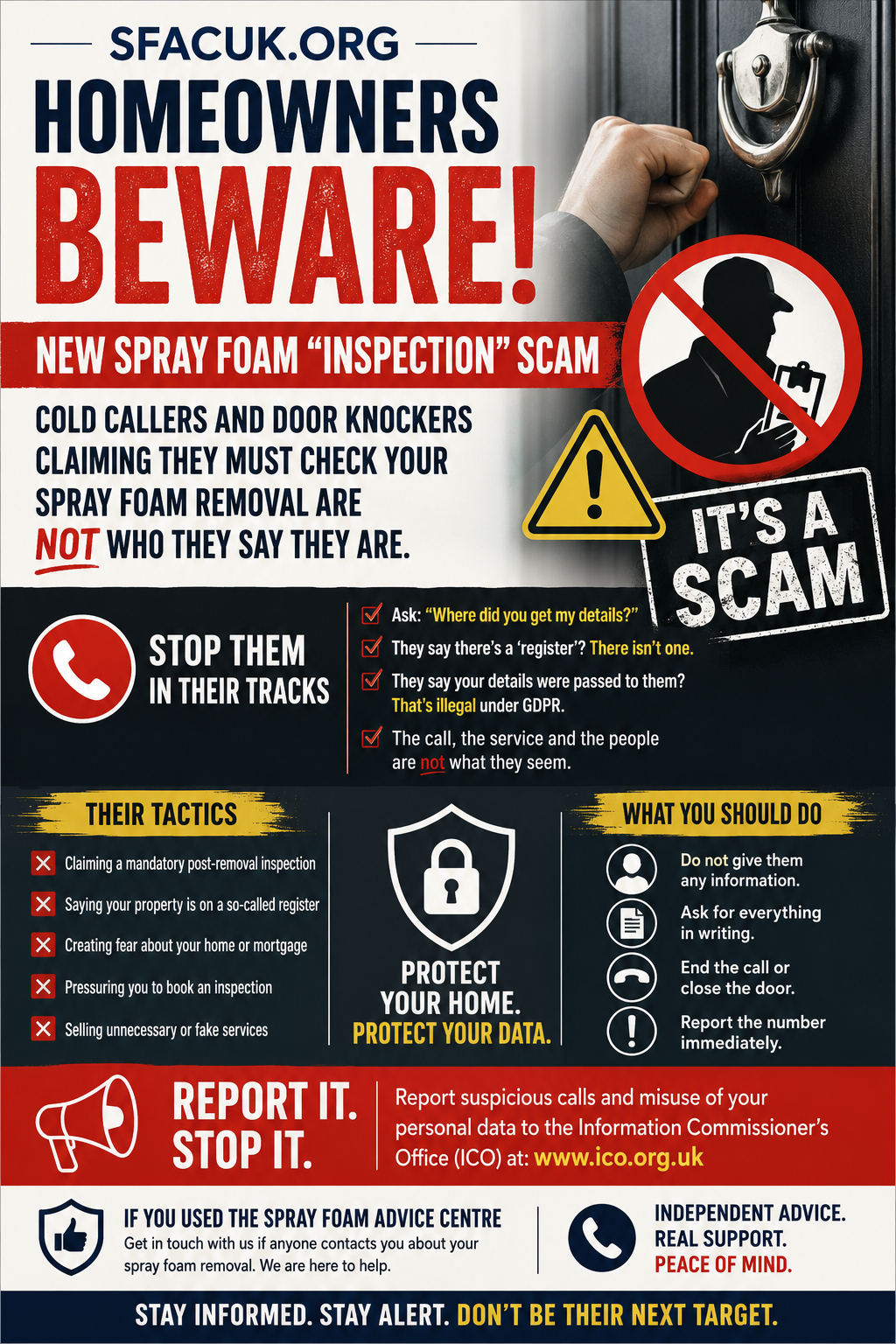
🚨 URGENT WARNING -COLD CALLS & DATA MISUSE ALERT 🚨
March 10, 2026
The Spray Foam Advice Centre Expands Support Across the UK
March 10, 2026
Cold Callers Targeting Spray Foam Insulation – What You Need to Know
February 24, 2026
Why “Too Good To Be True” Home Improvement Offers Usually Start With One Thing — A Phone Call
February 4, 2026
Recent announcements from the UK Government have focused heavily on new eco-home initiatives aimed at reducing household energy bills. These updates place particular emphasis on heat pumps, alternative heating technologies, and electricity-saving measures .
February 4, 2026
At the Spray Foam Advice Centre , one of the most worrying trends we are currently seeing is the growing number of homeowners who accepted very low, unrealistic quotes for spray foam insulation removal — only to find themselves facing major and unexpected roof repairs halfway through the job .
January 21, 2026
What Type of Insulation Does Your Property Really Need? By Adam Gough – Insulation & Home Improvements Expert
November 19, 2025
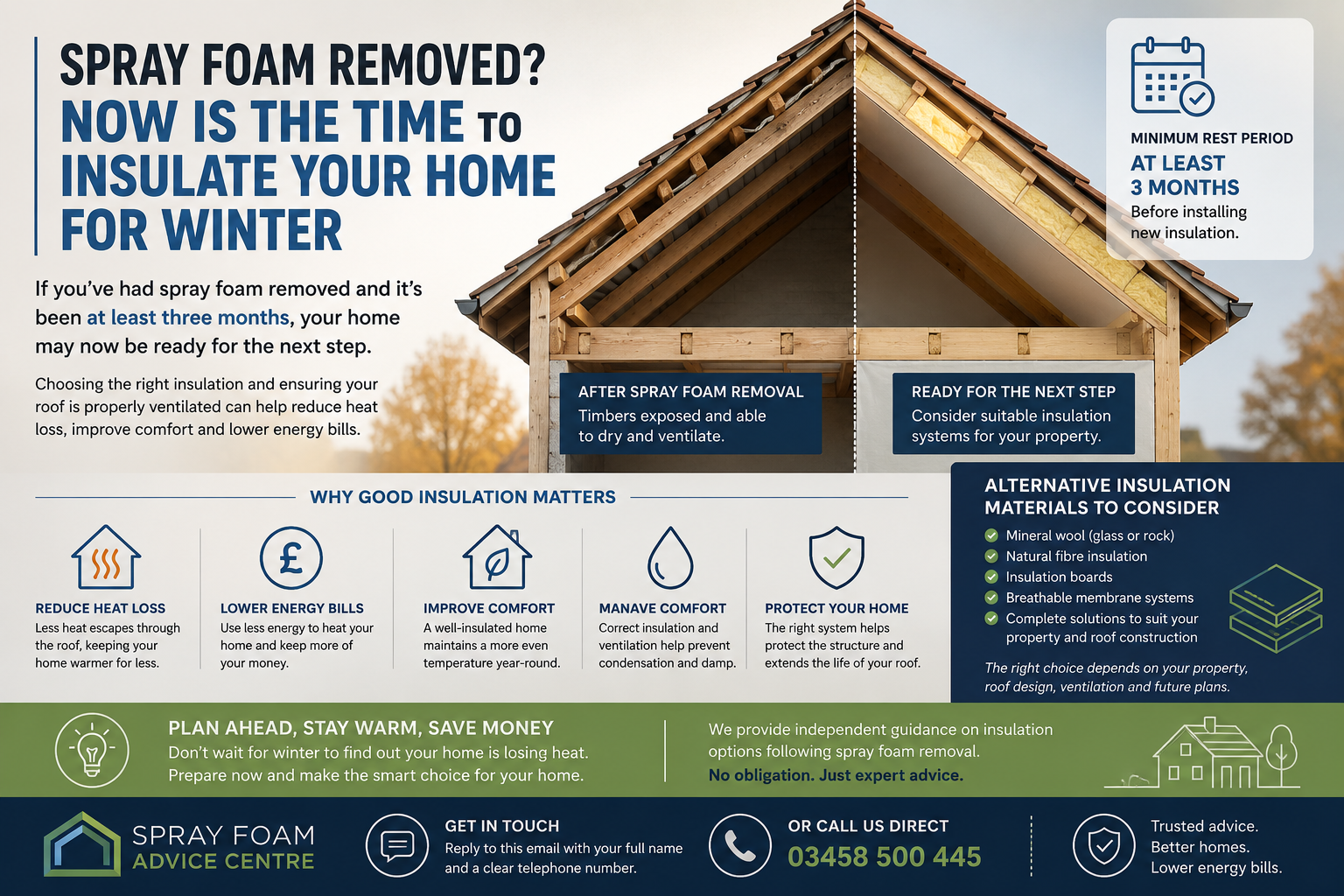
Staying Warm After Spray Foam Removal: Essential Winter Advice While Your Home Recovers