Having spray foam insulation removed from your property doesn't mean you have to accept a colder home or higher heating bills. With the right approach, you can restore your home's energy efficiency, improve comfort and keep heating costs under control.
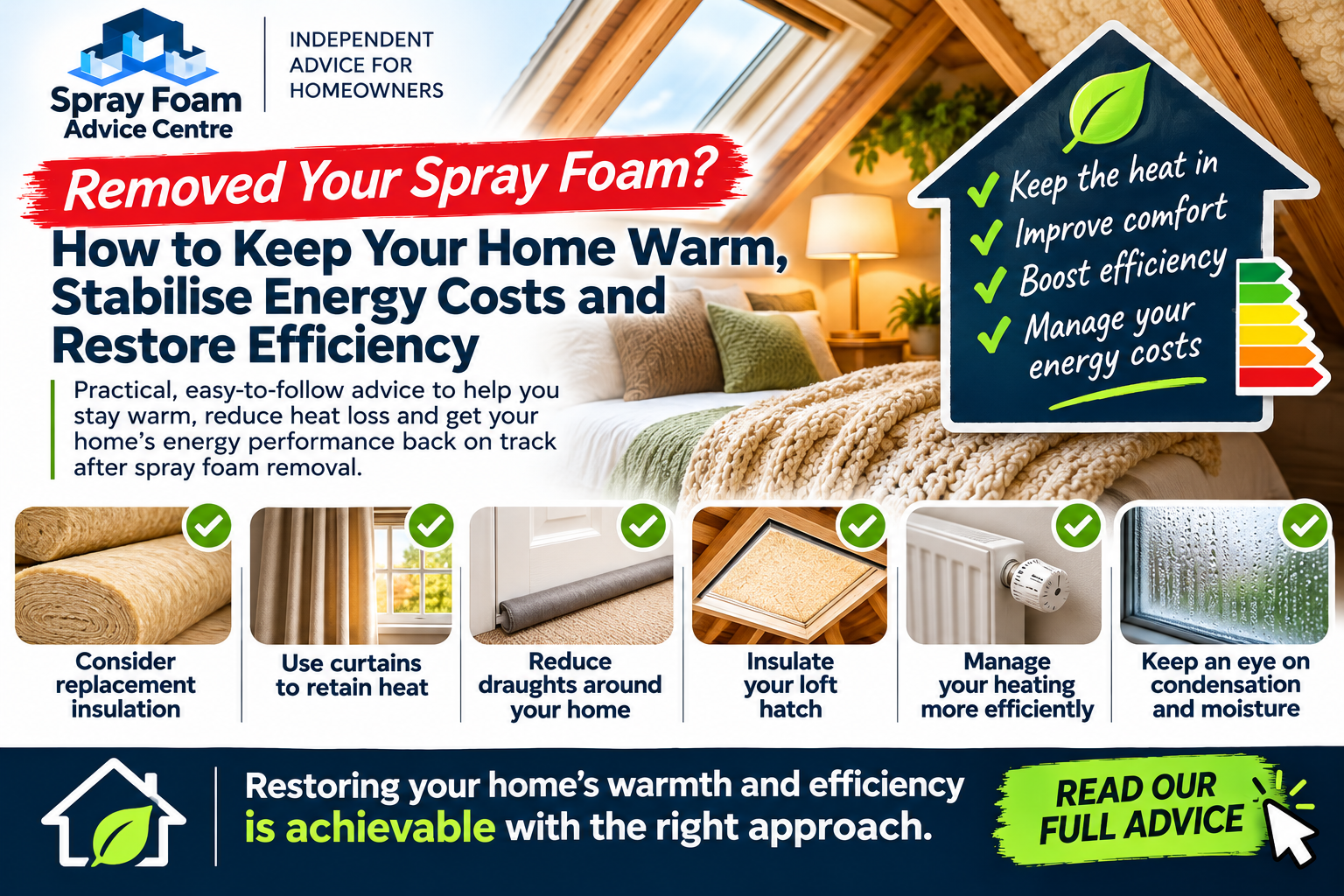
At the Spray Foam Advice Centre, we understand that having spray foam insulation removed can be a considerable undertaking.
For many homeowners, removal has been necessary because of mortgage difficulties, property sales, concerns about roof ventilation or questions surrounding the original installation.
But once the foam has been removed, another important question arises:
How do you keep your home warm and energy-efficient without the insulation that was previously installed?
The good news is that there are several practical measures you can take, many of which cost very little.
1. Understand What Happens to Your Home After Spray Foam Removal
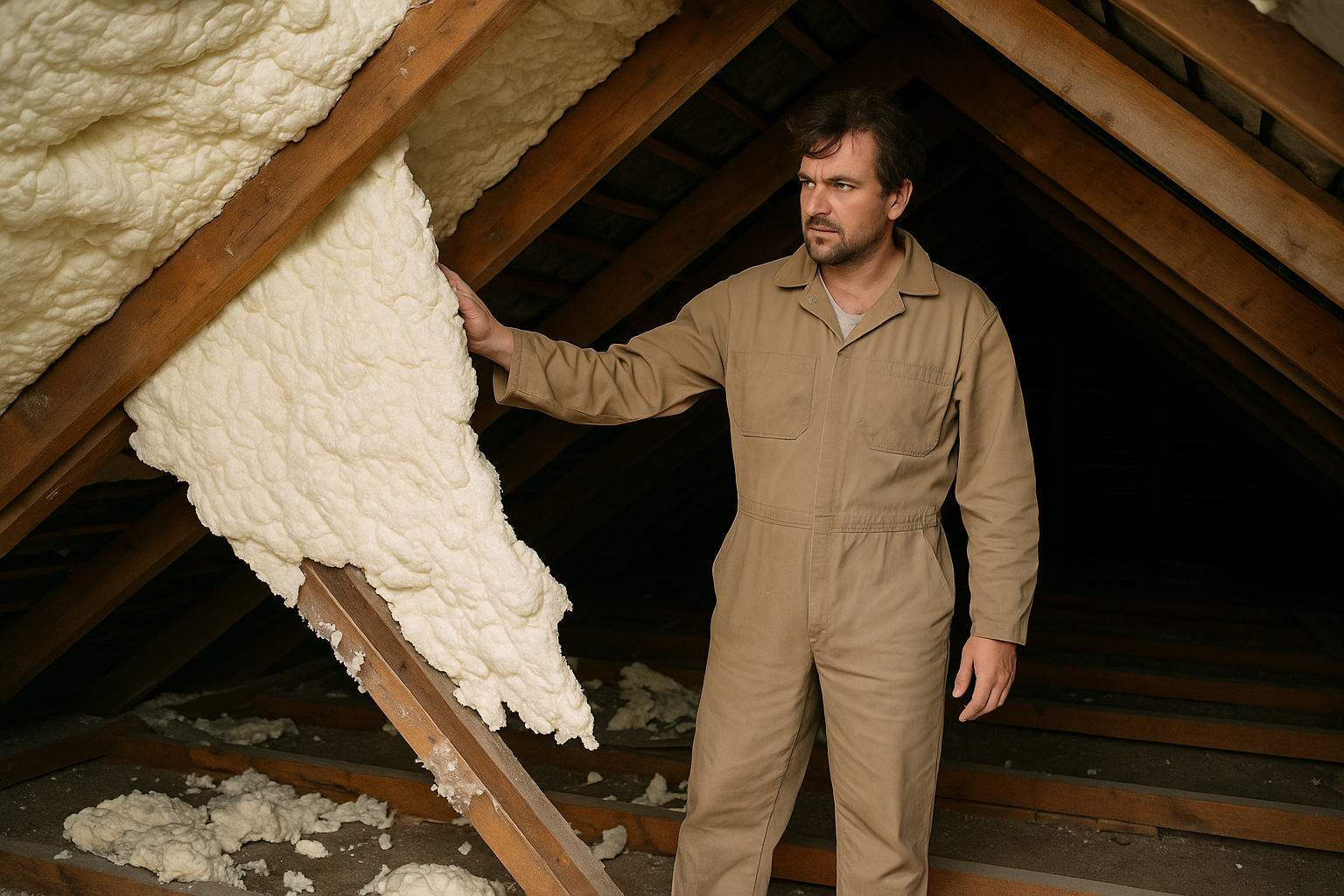
Spray foam insulation is often applied directly to the underside of roof coverings or between roof rafters.
When removed, the roof may temporarily have less thermal protection, particularly if there is no suitable insulation at ceiling level.
This can result in increased heat loss, colder rooms and potentially greater demand on your heating system.
However, this does not necessarily mean your home will become significantly colder.
Much depends on the insulation already present, the construction of your property and whether replacement insulation is required.
Our advice is to have your property's insulation requirements assessed before deciding how to restore its energy efficiency.
2. Consider Suitable Replacement Insulation
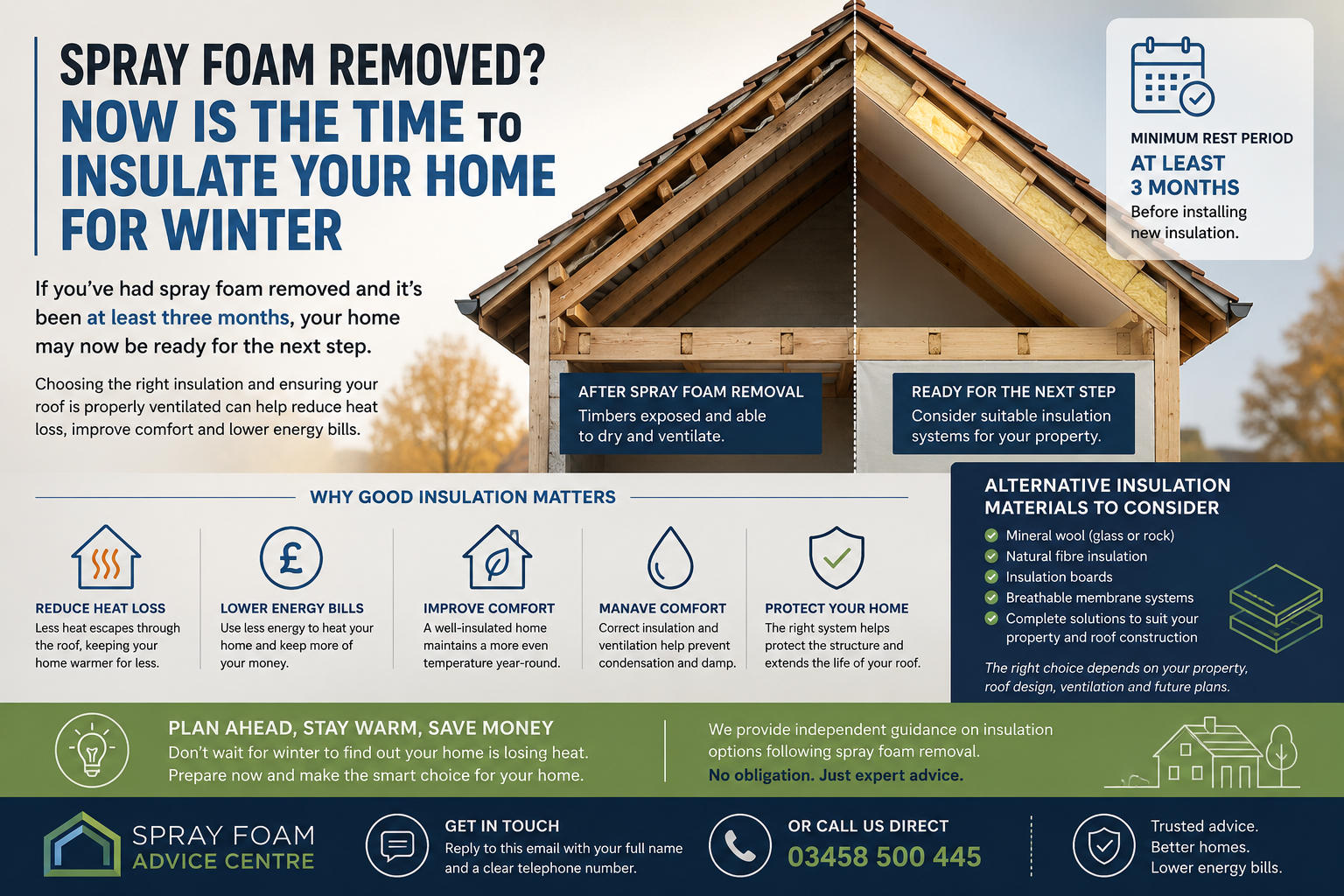
One of the most effective ways to restore thermal performance is to install appropriate replacement insulation.
For many traditional loft spaces, mineral wool insulation installed between and over the ceiling joists can provide an effective, relatively affordable solution.
The Energy Saving Trust recommends a depth of around 270mm for conventional mineral wool loft insulation, although the appropriate solution will depend on the property.
Other systems, including specialist multifoil insulation products, may also be considered where suitable, provided they are correctly designed and installed.
The important point is to choose insulation that is compatible with the roof construction and allows the building to manage moisture appropriately.
Never assume that replacing spray foam with another insulation product is simply a matter of filling the same space.
A correctly designed insulation system should consider ventilation, condensation risks, roof condition and long-term maintenance.
3. Keep Your Bedrooms Warmer Without Increasing the Heating
Recent energy-saving advice has highlighted how small changes around the home can make rooms feel warmer without necessarily increasing heating costs.
One surprisingly simple improvement is to consider where your furniture is positioned.
Beds placed against cold external walls or directly beneath draughty windows may feel less comfortable during winter.
Where practical, positioning a bed against an internal wall can help reduce exposure to colder surfaces.
Similarly, keeping furniture away from radiators allows warm air to circulate more effectively around the room.
These simple changes may improve comfort, particularly while you are considering longer-term insulation improvements.
4. Use Curtains to Retain Heat
Windows can be a significant source of heat loss.
Closing curtains at dusk can help reduce heat loss through glazing and make rooms feel more comfortable during colder evenings.
Thermal-lined curtains can be particularly useful, especially in older properties.
Heavy fabrics can also provide an additional insulating layer.
However, remember to keep curtains clear of radiators where possible so that heat can circulate into the room rather than becoming trapped behind the fabric.
5. Find and Reduce Unwanted Draughts
Draughts can make a home feel colder even when the heating is operating normally.
After spray foam removal, it is worth reviewing areas where unwanted air leakage may be affecting comfort.
Common locations include:
- External doors and window frames.
- Gaps around skirting boards.
- Loft access hatches.
- Gaps around service pipes and cables.
- Poorly sealed floorboards.
Draught-proofing strips, suitable sealants and door draught excluders can help reduce unnecessary heat loss.
However, it is essential not to block ventilation openings designed to protect the roof or provide fresh air to the property.
Ventilation and draught-proofing serve different purposes, and both need to be considered.
6. Don't Forget Your Loft Hatch
One of the most overlooked areas of heat loss is the loft access hatch.
Even if your loft has good insulation, an uninsulated or poorly sealed hatch can allow warm air to escape into the roof space.
Installing appropriate insulation to the hatch and fitting draught seals around its edges can make a useful difference.
This is often a relatively inexpensive improvement.
7. Manage Your Heating More Efficiently
Following spray foam removal, homeowners sometimes worry that their heating bills will increase immediately.
Rather than simply turning up the thermostat, consider how efficiently your heating system is operating.
Using programmable heating controls, thermostatic radiator valves and sensible heating schedules can help manage energy consumption.
It is also worth ensuring that radiators are not obstructed by furniture and that the heating system is properly maintained.
Where appropriate, heating individual occupied areas rather than unnecessarily heating the entire property may help control costs.
The objective should be to maintain a comfortable, healthy indoor temperature while avoiding unnecessary energy consumption.
8. Keep an Eye on Condensation and Moisture
One of the reasons spray foam installations can become problematic is their potential interaction with moisture, ventilation and roof construction.
After removal, homeowners should ensure that any underlying problems have been properly identified and addressed.
Check for signs of condensation, dampness, water penetration or deterioration of roof timbers.
If these issues are present, they should be investigated before new insulation is installed.
A well-insulated property must also be properly ventilated.
Insulation should help retain warmth without creating moisture problems that could damage the building over time.
9. Give Your Home Time to Settle After Removal
Following removal, particularly where roof repairs or moisture-related work have been necessary, it can be sensible to allow time for the property to dry and its condition to be reassessed.
At the Spray Foam Advice Centre, we generally encourage a cautious approach to replacement insulation where there have been concerns about moisture or the roof structure.
The appropriate waiting period depends on the property's condition and professional assessment.
Where significant dampness has been identified, monitoring and further inspections may be necessary before additional insulation is installed.
The priority should always be the long-term condition of your home, rather than rushing to replace one insulation system with another.
10. Restoring Your Home's Energy Efficiency Is Achievable
Removing spray foam insulation can feel like a backward step, especially if you originally purchased the product to reduce heating costs.
However, there are established insulation methods and practical energy-saving measures that can help restore your property's thermal performance.
For many homeowners, the removal process also creates an opportunity to assess the roof properly, address ventilation issues and choose an insulation system better suited to the property.
Small improvements to draught-proofing, curtains, heating controls and loft insulation can all contribute towards a warmer, more comfortable home.
Our Advice: Think About the Whole Property, Not Just the Roof
At the Spray Foam Advice Centre, we believe homeowners should take a balanced approach to energy efficiency.
Insulation is important, but so are ventilation, moisture management, heating controls and the general condition of the building.
If you have already removed your spray foam, concentrate on ensuring the roof is sound, any moisture problems are resolved and appropriate replacement insulation is considered.
If you are still considering removal, seek independent advice before starting work.
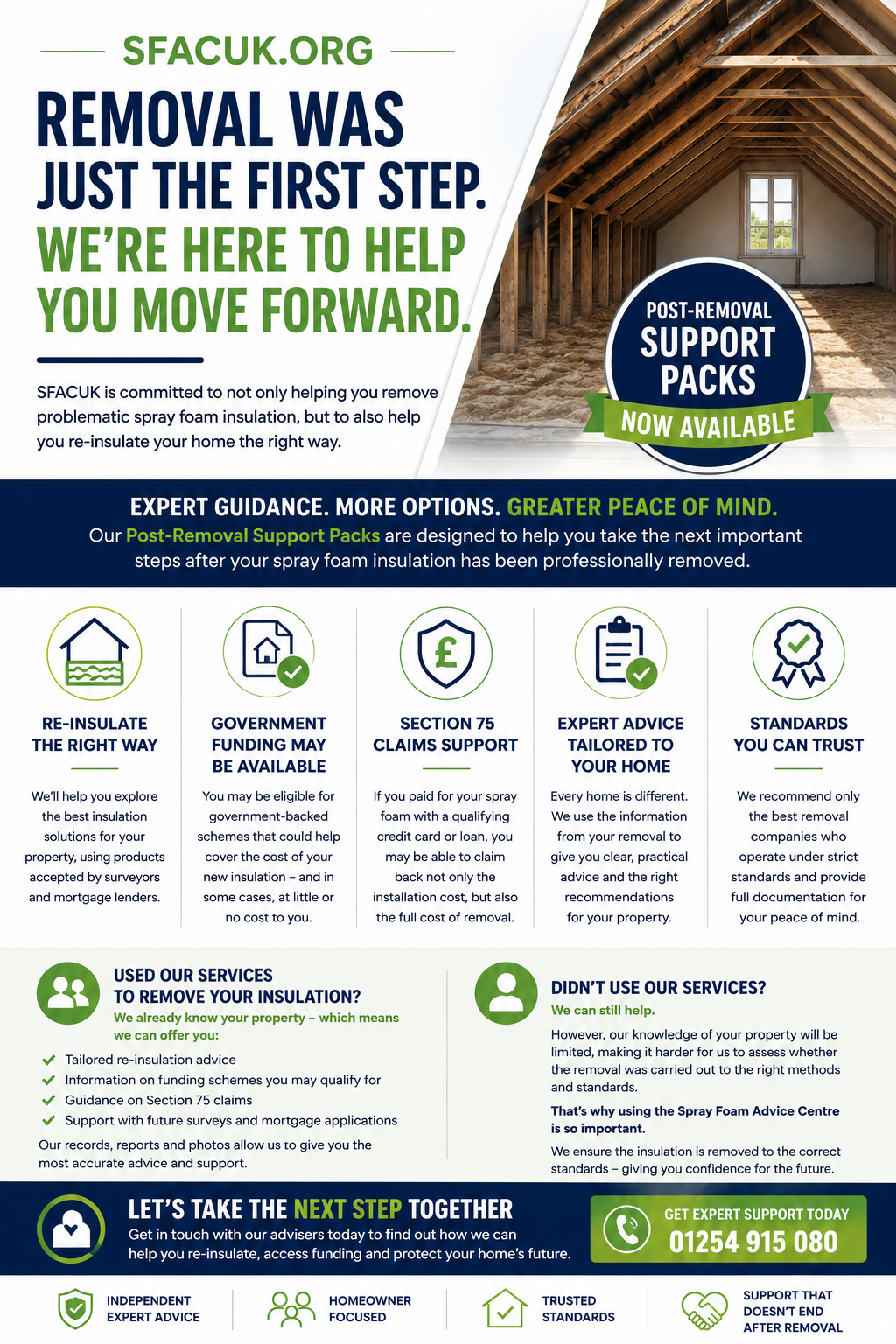
There may also be potential routes for recovering the cost of your original spray foam installation and necessary removal, depending on your circumstances.
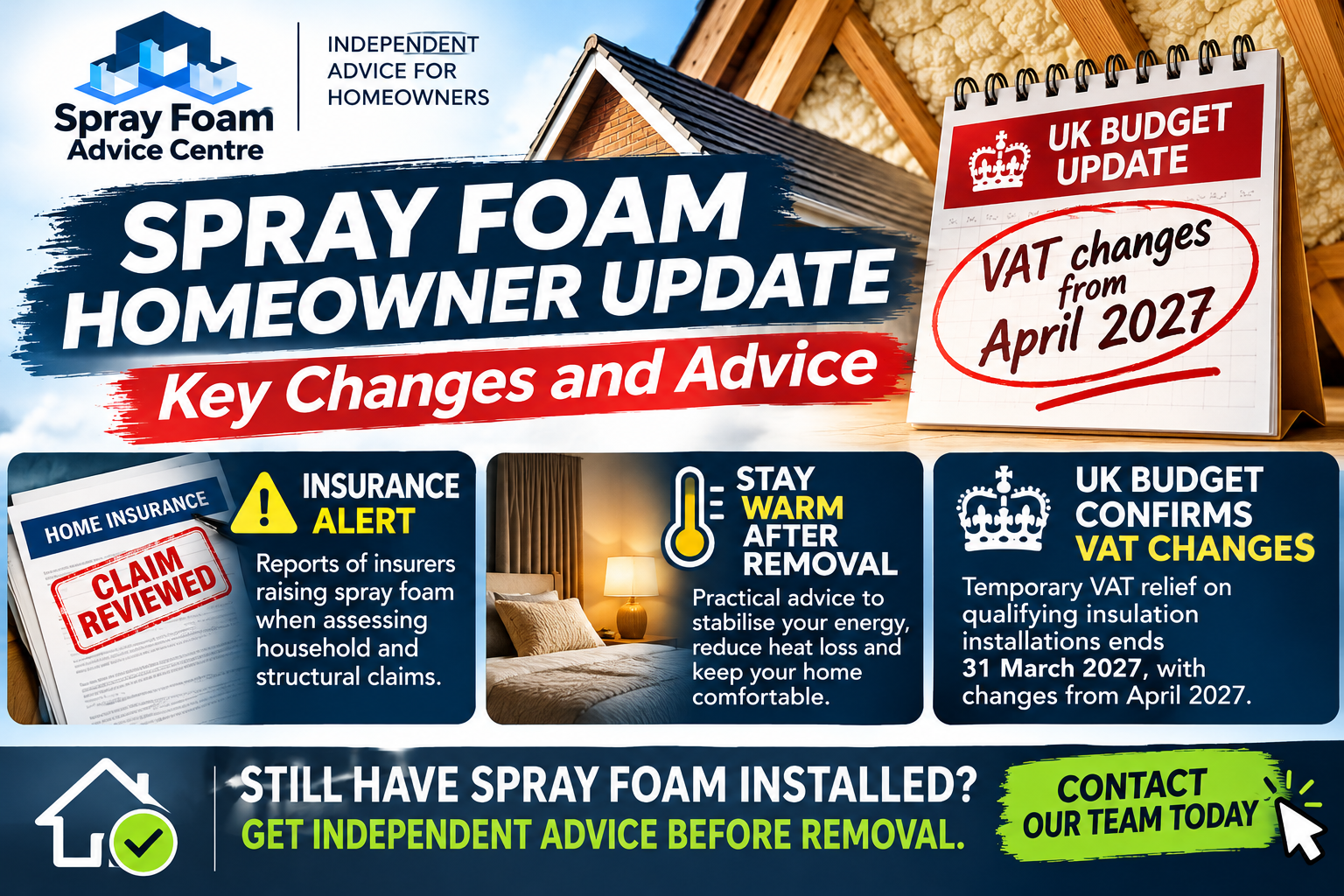
Our specific pre-removal cost-recovery assistance is available only to homeowners who still have their spray foam installed.
Still Have Spray Foam Installed? Speak to Us Before Removal
If your spray foam is still in place and you are considering having it removed, contact the Spray Foam Advice Centre before committing to any work.
We can help you understand the process, the importance of protecting relevant evidence and the options that may be available in your particular circumstances.
Complete our online enquiry form and allow one of our advisers to contact you.
Removing unsuitable spray foam doesn't have to mean sacrificing your home's comfort.
With appropriate advice and the right improvements, you can work towards a warmer, healthier and more energy-efficient property.
Spray Foam Advice Centre
Independent advice for UK homeowners.
Share this article